
GAO details why KBR lost $1.8B NASA spaceflight contract
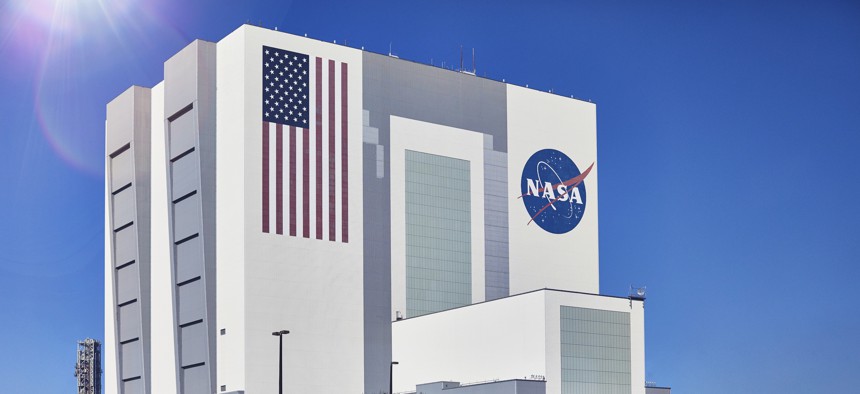
Gettyimages.com/Bjarte Rettedal

 By
Nick Wakeman
By
Nick Wakeman
A rival joint venture’s cost advantage and KBR’s declining performance scores doomed the incumbent’s challenge.
A newly-released protest decision offers new details on why KBR lost a $1.8 billion incumbent NASA contract to support several space vehicles.
NASA uses the COSMOS contract to support the command-and-control systems for programs such as Orion, Space Launch System, the International Space Station, the Commercial Crew Program and Artemis.
The Ascend Aerospace and Technology joint venture won the contract in September, and KBR filed a protest that pushed NASA to review its evaluation.
KBR filed a second protest in December after NASA again chose Ascend, a joint venture of Aerodyne Industries and Amentum. The Government Accountability Office denied KBR's protest on March 24.
While we reported on the decision earlier, details on how NASA made its choice and KBR’s challenges were not available until GAO released the public version of its decision on Wednesday.
KBR argued that Ascend should have been disqualified because the JV did not include include a small business plan. But GAO found that the solicitation explicitly said proposals would not be rejected for missing small business goals.
Also, Ascend was not required to submit a plan because of its status as a small business joint venture.
KBR also challenged how its proposal was evaluated and alleged that NASA removed the word "greatly" during the corrective action. KBR argued that the word was removed to prevent it from a higher rating and justify the award to Ascend.
However, NASA countered that the word was removed as part of a cleanup of sloppy wording. NASA said the same fix was applied to other bidders, including Ascend.
KBR’s final argument focused on its incumbent status. KBR claimed NASA should have rated its past performance as “very high” instead of just being put down as “high.”
GAO rejected that part of KBR's argument as well and wrote that “contrary to KBR’s position, it is not entitled to the highest past performance rating simply because, as the incumbent on the predecessor contract, it has the most relevant past performance.”
GAO also noted that KBR’s past performance scores on the contract had gone down after it was converted from a fixed-fee model to an award-fee model.
Ascend and KBR were two of seven bidders for COSMOS. Four competitors scored 799.5 and above on a 1,000-point scale.
Ascend’s evaluated cost of $1.49 billion was the lowest among the bidders and it had the second highest proposal score. That combination of low price and a high proposal score gave Ascend the advantage when NASA conducted its best-value tradeoff evaluation.
KBR’s evaluated cost was $1.62 billion but its proposal score was lower than Ascend’s.
One unnamed bidder had the highest proposal score, but its price was 6% higher than Ascend’s. Given Ascend’s score and pricing, NASA said it could not justify that higher price.
The unnamed company did not file a protest.
GAO's decision clears the way for Ascend to take over the work from KBR and support the Johnson Space Center's human spaceflight operations. Work includes systems engineering, research and development, mission operations, IT, and technical services.
COSMOS has a five-year base and a pair of two-year options.