
Trax loses White Sands protest, but judge hits government over AI disclosures
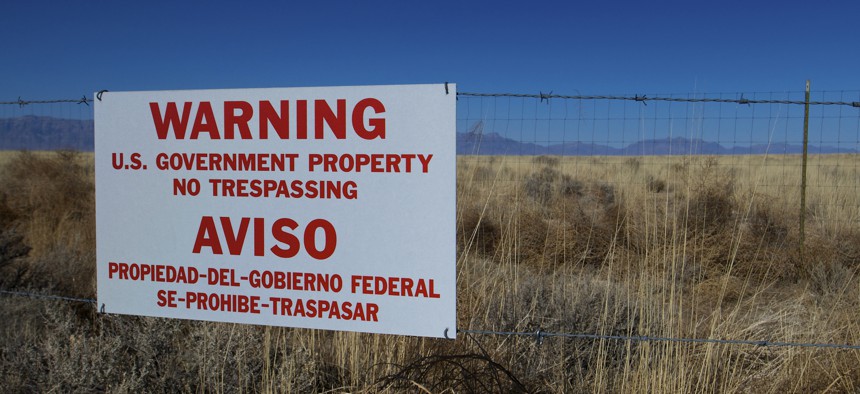
A warning sign outside the White Sands Missile Range in New Mexico. Gettyimages.com/Siede Preis

 By
Nick Wakeman
By
Nick Wakeman
The Army tested an artificial intelligence tool on the $450 million competition, and its outputs reached evaluators and the contracting officer. The government did not provide many details on that until the judge pressed.
Trax International Corp. may have lost its protest at the U.S. Court of Federal Claims, but the government’s lawyers may be in some hot water for not being forthcoming with the judge.
Over the summer, Trax challenged the Army’s decision to award a $450 million mission support services contract at the White Sands Missile Range in New Mexico to the Southwest Range Services joint venture. SA-Tech, Amentum and EWA Warrior Services are partners in the JV.
TRAX laid out several challenges to how the Army conducted evaluations, including the fact that the service branch used artificial intelligence to evaluate proposals.
Trax argued that the Army's Fast Track AI tool committed several hallucinations that gave the impression that the proposal by Southwest Range Services was superior to Trax's bid.
Judge Carolyn Lerner denied that argument because TRAX could not identify any actual errors in the evaluation that could be traced to the AI tool. Lerner wrote in her Sept. 22 ruling that while she "cannot entirely rule out the use of AI," TRAX needed to show more.
But at the same time, the Army drew the judge’s ire because their story about how they used the AI tool changed over the course of the case.
The judge has written a still-sealed show cause order to force the government to explain itself on the record. The show cause order will not change the outcome for TRAX, but it could result in some sanctions for the attorneys representing the Army.
Lerner wants the government to "explain the errors and misrepresentations in its briefing" on TRAX's motion to add the AI evaluations to the record.
The dispute over the record began when Trax asked the court to add the AI outputs to the administrative record. The government said a procurement analyst had run the proposals through Fast Track to test whether the tool could be used in future source selections.
According to the government, the evaluation board saw only one output from a third unnamed bidder and only on a screen. Board members judged it unusable and none of the outputs were entered into the contract file or used in the decision, the government said.
That account did not hold up. When Lerner ordered the Army officials to answer specific questions in supplemental declarations, the procurement analyst acknowledged for the first time that he had also sent the AI evaluations of the TRAX and Southwest Range proposals to three people.
Two were members of the evaluation board and the third person was the contracting officer.
Lerner called it a "belated admission."
She ruled that the AI evaluations need to be in the administrative record because they are “relevant to the process” and bear directly on “Trax’s claim that AI-assisted review introduced errors that infected its technical evaluation.”
Once the AI outputs were in the record, it became clear the board's evaluation of the third bidder contained passages that were nearly sentence-for-sentence identical to the AI-generated evaluation.
Lerner has written her show cause order, but the government has asked for more time to submit redactions to the order. Redactions were due Sept. 30 (today) and the judge’s response is expected Oct. 13.