The Homeland Security Department has almost wrapped up awards for the hyperscaler-focused portion of this centralized cloud program with Microsoft's contract still under construction.
The Department of Homeland Security has two more hyperscaler awards to finalize before it can move ahead on a separate competition for this enterprise cloud program.
The Homeland Security Department set up this blanket purchase agreement to aid its migrations of business applications toward reusable services, such as cloud computing.
The Homeland Security Department is working on contracts with the other three major hyperscalers and a separate, multiple-award competition for support services.
The Homeland Security Department is entering into direct contracts with the four major hyperscalers and setting up a separate, multiple-award vehicle as part of this enterprise cloud effort.
To be called Cumulus, this new contract will cover all aspects of commercial cloud computing and is part of the Homeland Security Department's push for more visibility into spending and usage.
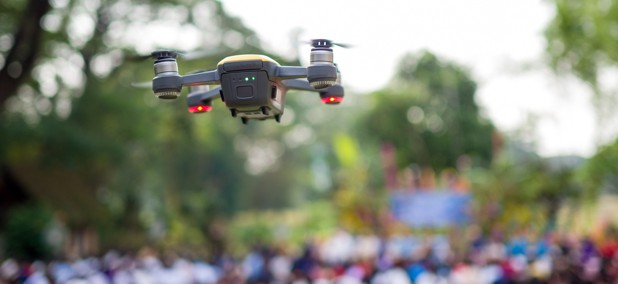
The agency said the new office is already in the process of finalizing a $115 million investment in counter-drone tech that will be used to help secure the FIFA World Cup and activities celebrating the United States’ 250th anniversary.
A final solicitation is now live for the Cellular Wireless Managed Services 3.0 contract, which covers roughly 150,000 connections across the Homeland Security Department.
The Cybersecurity and Infrastructure Agency sought to hire a group of contractors for help in service delivery to its components and a more rapid approach for technology testing and evaluation.
The Homeland Security Department uses this blanket purchase agreement to acquire support for all aspects of its IT environment used by 15,000 employees.
As the Homeland Security Department sees things, neither FirstSource III nor PACTS III fit into how the Trump administration wants civilian contracting to be done.