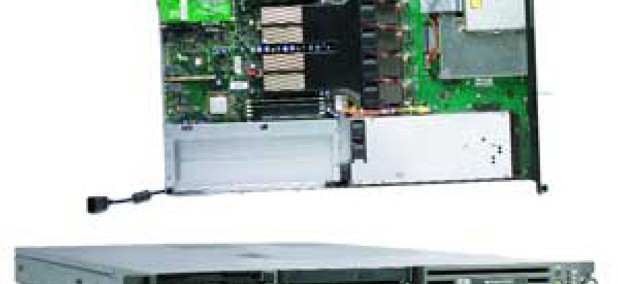
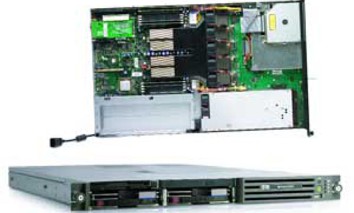
The best thing about migrating to 64-bit computing might be that you don't have to do it in one great leap. A new class of dual-processor servers using Opteron and Xeon chips lets you make the move incrementally.
Printers have come a long way since the days when lumbering impact printers attached to mainframes, and non-networked PCs pumped out ASCII text symbols on reams of paper that jammed almost as often as not.
If your computing workload consists mainly of word processing with a daily dose of Web surfing or e-mail checks, the 15- or 17-inch LCD monitor that comes bundled with many PCs might be all you'll ever need.
Last year, I predicted that this would be a good year for 10-Gigabit Ethernet switch and router manufacturers because of the growing demand for high-bandwidth connections in enterprise networks.
The 64-bit processors from Intel Corp. and Advanced Micro Devices Inc. could alter the landscape of high-performance computing. The design advancements in AMD's 32/64-bit Opteron and Intel's 64-bit Itanium are the latest example of Moore's Law, which holds that computer chips will double in density, and thus capability, every 18 to 24 months.
The Storage Networking Industry Association is working overtime to sell its storage management solution to vendors, application developers and users. To date, proprietary systems have made up the bulk of management tools for storage area network users. Buyers are locked into their platforms, which can be frustrating and expensive.
You can find plenty of powerful notebook PCs on vendor Web sites and retail shelves, and many of them are available at prices low enough to surprise you. But if you want exactly the right one for your requirements, do a little digging first.
Blade servers have come on like gangbusters in the last year, for two good reasons: They can save you space and money.According to a report from International Data Corp. of Framingham, Mass., blade servers make up the fastest-growing server market segment, expanding 763 percent from year to year. It estimated that blades will account for more than one quarter of the total server market by 2007.
Security concerns notwithstanding, the number of wireless LANs throughout government is growing. And WiFi, or wireless fidelity, is the global standard for wireless LANs.
The foundation for storage area networks could be shifting.At the moment, Fibre Channel SANs rule. They are dedicated, centrally managed and secure systems used to connect servers to storage devices across enterprise local area networks.
Web services are heralded as a revolutionary new concept in computing that will gain huge competitive advantages for their users and reinvent the Internet as we know it.