
Riverside Research has a new CEO and a new plan to get noticed after 60 years under the radar

"Historically it's been very under the radar, but doing just some incredible missions," Lash says about his new company. Riverside Research

 By
Nick Wakeman
By
Nick Wakeman
Tom Lash wants to raise Riverside's profile and grow its bench of national security customers without straying from its physics-based roots.
Riverside Research has built a reputation as a go-to provider of physics-based research and development for national security customers over the past 60 years, all while staying virtually unknown to everyone else.
Their new CEO wants to change all that.
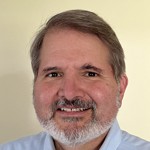
“Historically it's been very under the radar, but doing just some incredible missions," said Tom Lash, who was announced as the nonprofit firm's leader on Thursday morning. "I think we're going to do a better job of explaining Riverside to the market.”
Riverside Research spun out of Columbia University in 1967 and will mark its 60th anniversary next year. It operates from four locations: Fairfax, Virginia, Dayton, Ohio, New York City and Lexington, Massachusetts.
The firm focuses on high-end technical engineering and advisory work for national security customers, including hypersonics, autonomy, cybersecurity and terahertz imaging technology.
Riverside Research has pulled in $53 million in non-classified prime contract obligations over the past 12 months, according to USASpending.gov.
Lash said Riverside Research has 750 employees. Major customers include the Air Force, Defense Advanced Research Projects Agency, Intelligence Advanced Research Projects Agency, Defense Innovation Unit, Army and Navy.
"It really is defense-oriented, physics-based research and development and advisory services for national security customers and sponsors," Lash said.
While the company is a nonprofit, Lash is quick to point out it is not a federally-funded research-and-development center.
"The advantage of a nonprofit company is that we don't have shareholders, and therefore we don't have a fiduciary duty to a profit motive," he said. "We really can focus on customers."
It was one featured lured Lash away from his last company, Vibrint.
“The idea of being able to work for our customer's benefit solely as opposed to having split allegiances to shareholders and to our customers resonated with me,” Lash said.
Profits are reinvested into new technologies and reduced risks for customers, he added.
Riverside Research is governed by a board of trustees who gave Lash two priorities – raise its profile and grow.
"I think we have just tremendous opportunity to address other customers and sponsors that we're not currently supporting," he said. "Where we are, we're very deep, very bonded to those customers, but I think the national security space is a large space, and I think we have a lot more impact to be made."
The growth strategy includes both organic and potential acquisitions. Lash does not have a target list as he was only six days on the job when he spoke with Washington Technology.
But Riverside Research is looking to grow both technical capabilities and customer relationships it doesn't currently have.
Lash succeeds Steve Omick, who retired after a decade in the role. Omick was only the fourth CEO in Riverside Research's history. Lash is the fifth.
Lash will also lead efforts to expand Riverside Research's partnerships with the growing number of venture-backed defense technology startups.
“What is best for our customers is to work with the defense disruptors to bring our trusted, unbiased expertise and guidance," he said.
Riverside Research’s nonprofit status makes it a neutral broker for the customer and the disruptors.
Lash is also weighing whether Riverside Research should open-source more of the internally-funded R&D work.
But do not expect Riverside Research to expand into traditional IT work.
"I don't think so," Lash said when asked if that was a growth area. "I think we'll stay in our technical lane."
NEXT STORY: Serco hires Supplee to lead North American arm