
DARPA launches search for technologies to revolutionize combat casualty care
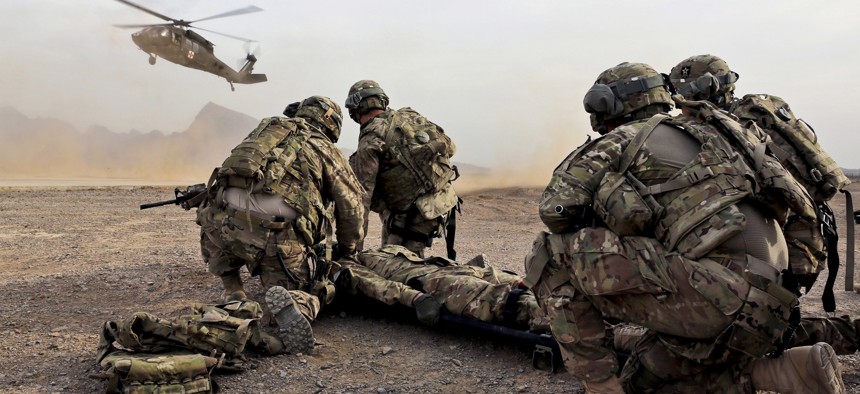
Gettyimages.com/Stocktrek Images

 By
Nick Wakeman
By
Nick Wakeman
The military's research agency wants rapid sensing, artificial intelligence-driven decision support and automated interventions that can work in austere battlefield environments.
The Defense Advanced Research Projects Agency wants to revolutionize combat casualty care by finding innovative technologies that can become part of medical systems on the battlefield.
DARPA's new request for information released Thursday describes its goals of increasing survivability and reducing severe complications from wounds that cause internal bleeding, compromise airways, involve brain injuries, and trigger multi-organ shock.
The agency wants to explore technologies that aid quicker decision-making and intervention in the field, where resources can be limited and environments hostile.
UPDATE: The due for comments is Dec. 3. The Sam.gov posting has been updated.
DARPA wants information on technologies that can rapidly sense and diagnose life-threatening conditions. DARPA also wants to explore the use of digital twins that can better predict outcomes of casualties.
The research agency is interested in automated or semi-automated solutions that can address issues such as airway management, bleeding control and hemodynamic stabilization.
Hemodynamic stabilization involves stabilizing blood pressure, heart rates and circulation so the body can continue to sustain vital organs.
Some of the technologies DARPA mentions in the RFI include sensing and imaging, artificial intelligence and machine learning, robotic and automated intervention technologies, and biomarkers for real-time field monitoring.
The agency also wants information about systems integration including human-machine teaming, augmented and virtual reality training, and autonomous resuscitation.
Since this is an RFI, it is unclear whether this will result in an actual contract. A second option could be a broad agency announcement that could trigger demonstration projects and technology pilots.
Responses to the RFI are due Dec. 3.
Stay in the know — Washington Technology’s Insider Membership gives you unmatched access to breaking news, in-depth analysis, and insights that federal contractors can’t afford to miss. Join today for 50% off.