Defense


DIU is now the Pentagon’s one door for drone tech – here’s how to walk through
DOD has consolidated unmanned systems programs under one office with the Defense Innovation Unit as the commercial gateway. Here’s what that means for contract strategy, data rights, and supply chains, writes Raymond Jones of Spencer Fane LLP.


Pentagon moves to scrap CAS, embrace commercial accounting standards
A new memo sets 30-to 90-day deadlines for shifting the Pentagon toward GAAP-based accounting standards, while trying to head off fears the department will police profits on fixed-price work.


SBA fast tracks 8(a) applicants in defense-critical industries
Only 1.2% of active 8(a) firms are registered in the 10 NAICS codes prioritized by the Small Business Administration, though pending reforms could expand the pipeline.


Testing plan sinks QinetiQ’s bid for a Polish aerostat surveillance system
A newly-released protest decision shows how a dispute over implied testing requirements and NATO's urgency doomed QinetiQ's argument.

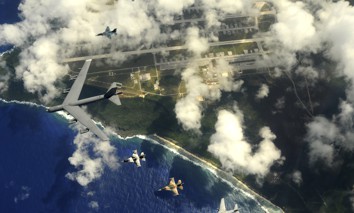
Three tribally owned firms land $400M Air Force Pacific advisory deal
Cherokee Nation Government Solutions, SSE BB&E JV and KIRA Services will compete for task orders spanning Hawaii, Guam, Japan, Alaska and Wake Island through 2031.



When the government blackballs your sub, CICA is no help
A dismissed protest shows how little recourse subs have when an agency knocks them out of a teaming agreement.


DISA sends mixed signals on combatant command network migration
After a protest, two RFIs, and a one-day comment window, the path forward is still unclear.


Mixed signals on acquisition are creating a confused market
The market will adapt to change but there is too much uncertainty and confusion about the direction and pace of that change, writes Stan Soloway, former president of the Professional Services Council.


Army picks Dragonfly payload system for spectrum sensing
Research Innovations will provide and maintain the ruggedized sensors under a nearly $100 million, five-year contract.


Air Force eyes overhaul of PLM program as Siemens contract nears 2029 end
An RFI seeking a modernized approach to how it updates and deploys the software it uses to manage data across its weapons systems.


Judge rules Anthropic supply chain risk designation was ‘illegal and baseless’
A Northern California judge found that the AI company’s products did not represent a meaningful threat to national security, making the Pentagon’s designation “unlawful retaliation.”


Army selects 5 companies to build nuclear microreactors on bases, under new $2 billion deal
The service’s plans for 20 on-base microreactors come amid a uranium enrichment shortage.


Marines want to move Camp Lejeune armory off paper and into the web
A new solicitation for a SDVOSB contract also leans on the Revolutionary FAR Overhaul deviation instead of the standard FAR.

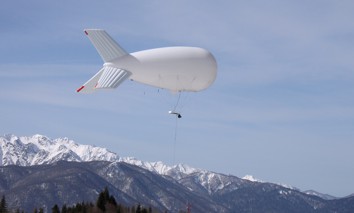
GAO tosses QinetiQ's protest of TCOM's $625M Polish aerostat deal
The decision clears the way for TCOM to deliver four surveillance aerostat systems to Poland under the foreign military sales program.


Exclusive