
Why contractors should look past DHS’ reconciliation buys
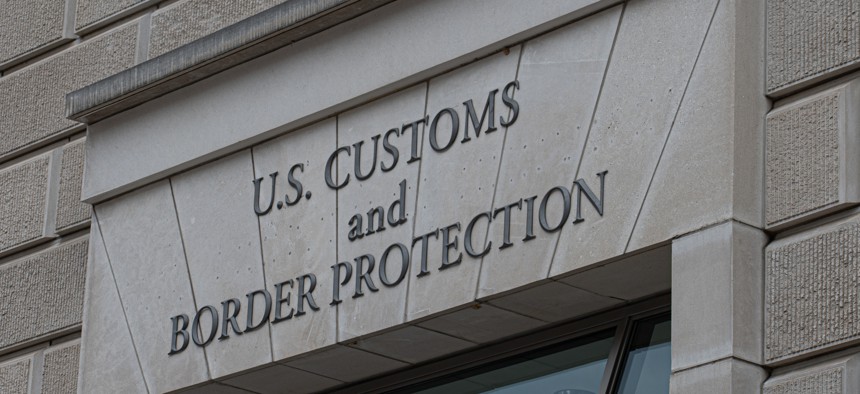
Gettyimages.com/ Douglas Rissing

 By
Nick Wakeman
By
Nick Wakeman
The operational tails of border technology, cutter ships and workforce expansion offers more enduring opportunities.
Contractors are scrambling to capture a share of the billions flowing into the Homeland Security Department through the reconciliation bill, industry veterans are telling companies to look beyond the initial capital investments to where the real – and more enduring – opportunities lie.
“It’s easy to buy things. It’s really hard to operationalize them and support them,” said Aaron Roth, principal and head of federal strategy and security with The Chertoff Group. He is also as former official with the Transportation Security Administration.
Roth spoke on a panel at Washington Technology’s Oct. 24 Power Breakfast Doing Business with DHS event. The other panelists were Krista Sweet, vice president of civilian agencies at the Professional Services Council; and Austin Gould, a principal at Deep Water Point & Associates and also a former TSA official.
The reconciliation bill is also known as the Big Beautiful Bill. It includes billions in new DHS funding for Customs and Border Protection, Immigration and Customs Enforcement and the Coast Guard.
Funds are going to border infrastructure, maritime operations (i.e., new cutter ships), technology systems and workforce expansion. President Trump has set a goal of spending three-quarters of the money before his term ends in January 2029.
The pressure to spend will be a challenge for most DHS agencies, the panelists said.
“Think about the tail associated with all that capital investment,” Roth said. “It’s going to be massive and it’s going to create huge operating expense challenges for agencies.”
The panelists shared that it typically costs five-to-15 times more to operate and sustain systems than it does to buy it. Agencies will face a reckoning to keep up.
Gould used TSA as an example.
"They get a certain amount of money to procure equipment and that same amount of money supports the equipment,” he said. “And over time, as systems get older, the tail — the support costs — go up and up and up and up.”
Even the expansion of the DHS workforce will create opportunities for industry.
"When you think about an agent or a component like CBP and ICE where you need a certain level of clearance, they're going to need help vetting people," Sweet said. "They're going to need people to do those background investigations. Those are often things that they outsource to industry."
A hiring surge creates cascading opportunities in human resources, payroll operations, financial modernization and training.
“Those are all things they're going to need contractors for down the road, even if perhaps the opportunities aren't laid out quite yet,” Sweet said.
One critical part of the operational tail that gets overlooked is the data infrastructure. The panelists called this a systemic weakness across DHS that will become hard to ignore.
"The worst offender in terms of data analytics, quite frankly, is TSA," Gould said. "They've got reams and reams and reams of data on everything that you can possibly imagine from equipment performance, passenger volume trends, you name it. But they cannot access it, period."
As CBP and ICE attempt to scale up operations with their reconciliation money, they will hit walls around data sharing and analysis.
"For what they want to do, they have to address some of these data sets at some point because they simply can't do what they want to do at a grand scale without that," Sweet said.
The challenge with the data opportunity is that it often loses out to more visible priorities.
"When it comes down to do we buy a whole bunch of new X-ray machines to keep the traveling public safe, or do we clean up this data backend, it's never cleaning up the data backend," Gould said.
The panelists recommended companies think about several things as they position themselves for these operational tail opportunities.
Sweet said companies should think about adjacent capabilities.
“If I can do this well here, what does that capability look like in a different mission set,” she said.
Services contractors will need to think about teaming differently as DHS and other agencies reject anything that begins to look like a consulting contract.
"Maybe you need to be on a team with a prime that's supporting an (original equipment manufacturer) and your services are embedded in the solution," Roth said.
Companies should feel some urgency to act because of Trump’s goal to spend three-quarters of the money over the next three years.
For contractors who can look past the initial procurement wins to the longer-term sustainment needs, the message from the panelists is clear:
The tail may wag the dog.
"It applies to everything," Roth said. "Even technology itself. The requirements for supporting that technology are massive compared to the technology it's replacing."