
GSA floats two-tiered Buy American marketplace on its Advantage platform
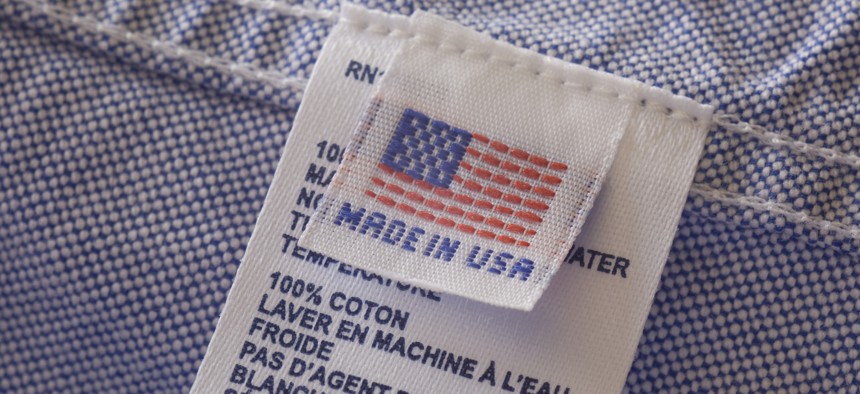
Gettyimages.com/ David Engelhardt

 By
Nick Wakeman
By
Nick Wakeman
A new sources sought notice seeks industry feedback on icons, filtered search results and a new special item number only for original equipment manufacturers.
The General Services Administration is floating the idea of creating a two-tiered GSA Advantage marketplace, where American-made products float to the top and a separate buying lane reserved exclusively for domestic manufacturers.
GSA Advantage is the agency's official marketplace for other federal agencies to acquire products and services from.
In a request for information posted Wednesday, GSA wants feedback on two approaches to identifying and promoting products made in America. This is part of GSA's efforts to comply with President Trump's executive order on ensuring truthful advertising of products claiming to be Made in America.
One approach would allow companies to voluntarily represent that their products meet the Buy American Act component test — meaning at least 65% of the product's components by cost are U.S.-sourced, a threshold that rises to 75% in 2029.
Products meeting that standard would receive an icon on GSA Advantage and filter to the top of search results.
The second approach is more structural: creating a new Special Item Number exclusively for original equipment manufacturers whose products meet the BAA component test. GSA is eyeing specific product categories for the SIN including batteries, cleaning equipment, hardware and tools, building materials and office furniture.
Notably, OEMs that list a product under the BAA SIN would likely be barred from offering that same product under any other SIN — a significant business constraint GSA is asking industry to weigh in on.
Across both approaches, GSA wants to know whether the supply chain infrastructure exists to make either workable. A key question is whether resellers can actually obtain component-level data from their OEM suppliers — and if not, why.
GSA is also asking directly about compliance costs, and whether the burden of classification, recertification, and auditing would ultimately drive up Schedule prices or erode government discounts.
One notable feature of the icon approach: if a buyer passes over a BAA-compliant product, GSA would require them to complete a survey explaining why. This would give GSA a data collection mechanism to track buyer behavior and decision-making.
Responses are due July 24.