
High-tech’s unsung heros: logistics and supply chain middlemen
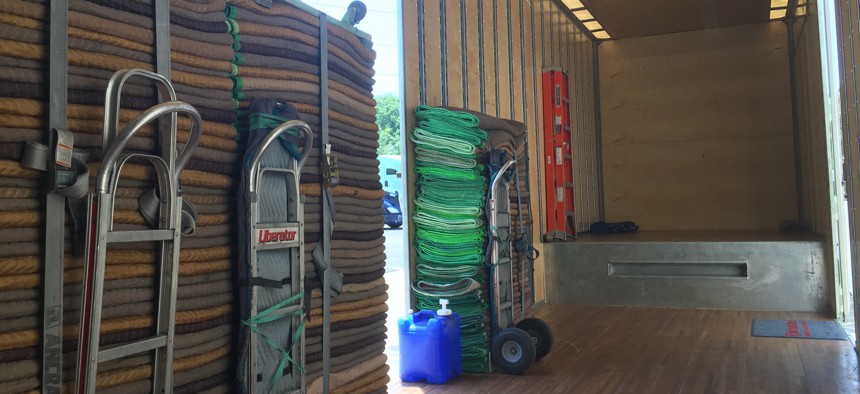
Interstate photo

Complex supply chains require specialized expertise—and that's exactly what saves taxpayers money.
The word “middlemen” has a bad rap in many circles, especially those who think all that happens in Washington is bureaucrats pushing papers at significant taxpayer expense.
But government contractors know that specialized intermediaries are essential to mission success, and that when part of a seamless supply chain, they achieve better results a lot more affordably to the taxpayer customer.
After all, key technologies like UAVs, data centers, and weapons parts don’t just appear where they are needed. They need to be manufactured, transported (sometimes across the globe), tracked, delivered, and set up in exactly the right spot.
Consider how Amazon utilizes independent owner-operator partners. The company has possibly the most sophisticated supply chain in the world - no offense to the U.S. military - and much of it is vertically integrated.
Yet even Amazon relies on third-party logistics (3PL) businesses to receive, process, and deliver products that are then disseminated by the partner. Some of these last-mile service delivery partners are small businesses; others are conglomerates unto themselves, like the United States Postal Service.
Smaller logistics and transportation companies use many of the same processes and technologies to achieve operational efficiency.
For example, a key piece of technology may start its journey in Iowa at the manufacturing plant. A third-party logistics partner – who acts as a subcontractor to the company that was directly hired by the client who needs the tech product – picked up the item from the dock and brought it across state lines on a Friday night because the client needed it on Saturday.
But with each roll of the wheels, another middlemen played a key role - the app that the truck, client, and prime contractor all used to track the truck’s progress. This means that the client doesn’t need to impatiently check his watch, wondering when the truck will arrive. Whether it’s at 6 a.m., noon, or three in the afternoon - the client knows when it will arrive, to the minute.
This process is even more complex when things come from overseas manufacturers. They leave the warehouse by truck or plane, are put on a boat for a few thousand miles, and then taken by train to a central location. Then, a truck takes them to a regional warehouse, and another truck takes the product to its final destination.
But whether it’s a single screw being shipped from an overseas plant to a U.S. base or the U.S. Department of Agriculture’s recently-announced reorganization, the processes are the same: a sophisticated combination of training and processes, technology implementations, and middlemen who all work together, each playing a vital role along the process.
That includes the very last step of set-up – no technology that goes into a hospital or on to a military base gets installed by the same company that manufactured it or shipped it. The processes are simply too technical, especially when lives are at stake and other technologies must be seamlessly integrated.
And most importantly: None of this gets done without people. The truck must be driven, the product processed, and the installation executed.
In our case, 72 non-CDL drivers receive training on how to look beyond the road in front of them. Situational awareness and traffic anticipation - especially in dangerous weather conditions - are key to safely driving vehicles that have up to 16 passengers or 10,000 pounds of transportable products.
It’s also why the entire transportation industry works with independent trucking partners, like the one in the Iowa story described above. 3PLs help ensure on-time delivery, efficiency, and cost control by going through exhaustive application, verification, and on-boarding processes. These include reviews of quality, safety, and financial standards, along with umbrella policies and procedures.
But once all the prep work is done, independent trucker partners aren’t just keeping the roads safe and delivering to data centers across the country. They’re also exemplifying the vendor's brand to the client, government or otherwise, as well as every person with whom they interact along the delivery journey.
Every part of the GovCon supply chain works best when everyone sticks within their lane and applies seamless processes and technology that improve outcomes for the government customer and taxpayers. Logistics and trucking companies have no expertise in building a data center or navigating international boating regulations - and we have no interest in learning.
Our job is to run the platform on wheels that gets tech to where it needs to be, on time and undamaged.
Ron Granville is vice president of residential and commercial services for Interstate Logistics.