
Serco’s new North America CEO: ‘I want to press the accelerator’
!["One of the things I want [Serco employees] to know is I am a very transparent leader, and I’ll share with them what I know when I know it," said Barbara Supplee, Serco's new CEO.](https://cdn.washingtontechnology.com/media/img/cd/2026/09/28/BarbaraSuppleeWT20260928/860x394.jpg?1790616725)
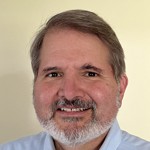
"One of the things I want [Serco employees] to know is I am a very transparent leader, and I’ll share with them what I know when I know it," said Barbara Supplee, Serco's new CEO. Serco photo.

 By
Nick Wakeman
By
Nick Wakeman
Barbara Supplee is betting that Serco North America's naval engineering, training business and fixed-price track record can help drive faster growth.
Barbara Supplee is one day into her new CEO role at Serco North America, replacing the former chief executive who left after less than a year on the job.
But Supplee is not looking at a company in need of a turnaround.
"I want to press the accelerator" instead, she said in an interview in the week before her Sept. 28 start.
Supplee joins Serco North America from Science Applications International Corp., where she served as executive vice president of its Army-Navy business group.
She succeeds Michael LaRouche, who left to become CEO of the KBR government business being spun off to create Trinzic.
In looking at her new company, she sees one already working in the right places.
"The organization is well positioned within the market and some of the top priorities for both federal and defense," she said.
Serco’s Navy business was a big draw for Supplee, who served as a Navy intelligence specialist earlier in her career. Supplee's private sector career has taken her to BAE Systems Inc., CACI International, General Dynamics IT and SAIC.
Most of those roles had a Navy focus. She pointed to Serco North America’s naval architecture capabilities as a key element of the company’s growth.
"We talk about shipbuilding, shipbuilding, shipbuilding. We have some of the best in the business. It's a national treasure," she said.
Those architects worked with the Defense Advanced Research Projects Agency USX-1 Defiant, an autonomous vessel designed to operate without a crew. Supplee believes that experience gives Serco North America an advantage in autonomy.
"Having naval architects that understand the design of manned systems and being able to apply that knowledge and capability to autonomy is an advantage," she said.
A second key to Serco North America’s growth is the work it does in live, virtual and constructive training. Serco North America grew that business when it acquired from Northrop Grumman for $327 million in 2025.
Combined with the company's long-running readiness work, she said the training business "has put us in a strong place to advance the readiness of the entire department.”
She listed other strengths including C5ISR work for Naval Information Warfare Center Atlantic and Pacific, electronic security systems and base operations support.
Together, she said those let Serco "connect a lot of dots in the overall life cycle of systems."
Serco North America employs 10,000 people and posted $2 billion in 2025 revenue. To grow, Serco North America will rely on breaking through what she sees as a challenge across the entire market – the mindset of the customer.
“That’s the biggest challenge really,” she said.
Industry has a role in helping acquisition professionals embrace new frameworks for doing business that are being pushed by the Trump administration. This includes more performance-based and outcome-based contracting, she said.
Thanks to its work with customers such as the Centers for Medicare and Medicaid Services, Serco North America has a depth of experience with these kinds of contracts. The company provides eligibility and enrollment support for the Affordable Care Act system, and the work is done through fixed-price and outcome-based contracts.
The company has automated processes and significantly reduced the number of people needed to run the system, Supplee said.
“I think we have a jump on some of the competition in that we’ve already proven that we can do that work in tandem with our customers,” she said.
Thanks to executive orders and Pentagon directives dictating fixed-price and outcome-based contracting as the default, contracts with those elements are expected to increase. Supplee said the growth is not just coming from new contracts, but also as part of the option years on existing contracts.
“I'm excited that we already have that core competency within the company because we will be able to respond to that and help customers, contracting officers, and acquisition professionals in getting it done,” she said. “It'’s better for all parties.”
Serco North America is looking to grow capabilities through partnerships with commercial tech companies as well as acquisitions when the opportunity arises, such as the Northrop training acquisition.
Supplee also sees opportunity north of the border. Canada's government is spending more on both defense and government services, she said. Serco North America also provides base operations support in Greenland and she sees possible growth if the new U.S. defense agreement there leads to more bases.
"Base operation support itself is right in our sweet spot," she said.
In a year, she said success should look like growth "sometimes in places that you haven't seen Serco." Her top priorities are space, LVC and autonomy, more automation in citizen services, and a stronger push into Canada.
Supplee is Serco North America's third CEO within the past 18 months, something she acknowledged as a lot of change for company employees.
“One of the things I want them to know is I am a very transparent leader, and I’ll share with them what I know when I know it,” she said.
She plans to spend her first six months traveling across the business.
"I have partnered with Serco; I have competed against Serco. I know quite a bit about the business, but to know the teams and really understand the capabilities, it's time to pack a bag," she said.
As she meets with employees, there are three basic questions she plans to ask:
- What should the company should stop doing?
- What should they start doing?
- What they should keep doing?
Supplee grew up in Minnesota, where both sets of grandparents were dairy farmers. She is a fifth-generation veteran and the first in her family to choose the Navy over the Army, which makes for "very fun times during the Army-Navy game."
She compares Serco North America's culture to life on a farm or aboard a ship.
"If you've ever been on a ship, it's not a nine to five. You work until the job is done," she said. "Just like with farming, it requires everybody to be all in."