
Why winning is keeping GovCon execs up at night

Gettyimages.com/ Hal Bergman

 By
Chris Crowder
By
Chris Crowder
The edge gots to firms that excel at navigating the new regulatory landscape. Here’s eight keys to building your advantage, writes Chris Crowder of Unanet.
From government shutdowns to regulatory upheaval to tectonic shifts in technology and even a pandemic, challenges are nothing new to government contracting firms. But the issue that keeps GovCon executives awake at night more than any other nowadays? It’s winning government contracts.
In findings from the 10th annual GAUGE benchmarking report from Unanet and CohnReznick (click here to access the report free of charge) that's based on a survey of more than 1,200 GovCon executives and leaders, respondents most often identified the ability to land government contracts as the issue over which they lose the most sleep.
Much of their concern stems from a fast-shifting regulatory environment in which cybersecurity requirements under Cybersecurity Maturity Model Certification 2.0 and the ongoing modernization of the Federal Acquisition Regulation are fundamentally changing how agencies evaluate contractors.
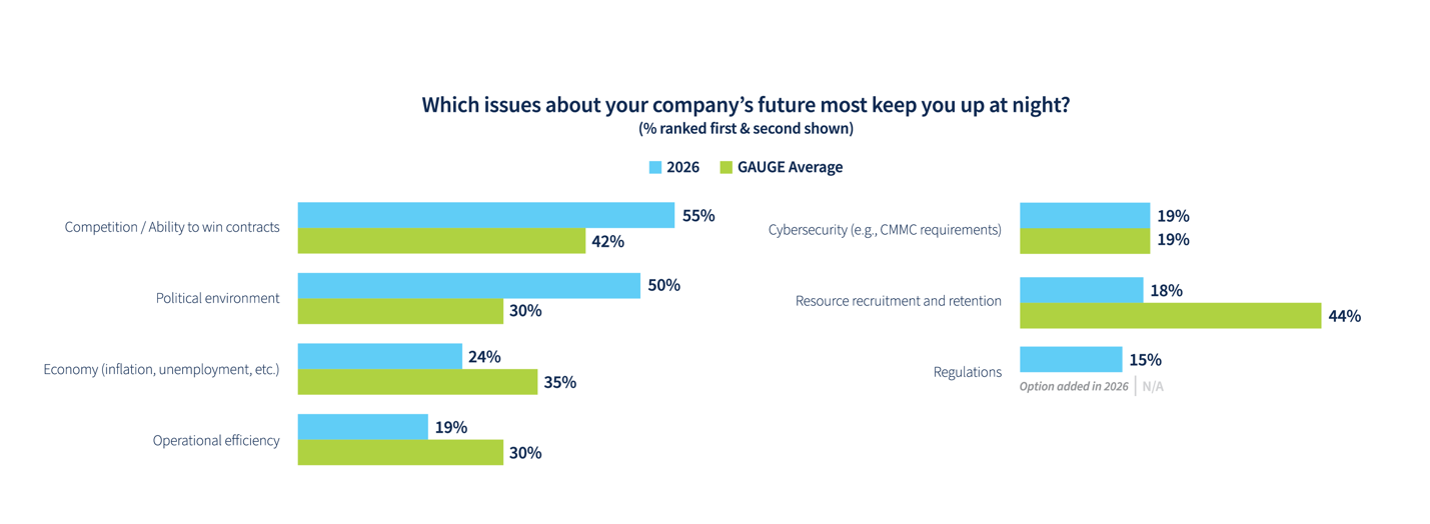
How, then, to win more government work and find relief from that sleeplessness? As our 2026 GAUGE Report findings make clear, much of it depends on a firm’s ability to manage its responsibilities under key federal regulations like the Revolutionary FAR Overhaul (RFO) and CMMC 2.0.
Firms that effectively navigate the nuances of FAR and CMMC are more likely to gain competitive advantages over their peers, given how heavily federal agencies weigh compliance in assessing a firm’s performance.
GovCon firms that excel at tracking, understanding and operationalizing compliance responsibilities come across as more trustworthy in the eyes of Uncle Sam and agency contract officers. And ultimately, trust is a huge factor in a firm’s ability to win contracts. Conversely, firms seen as riskier are less likely to receive awards.
Today, just over one-quarter (27%) of surveyed GovCon firms are posting a win rate of more than 50%, according to the GAUGE Report. The largest share of firms, 37%, report winning 25% or less of the proposals they submit. What’s more, the portion of firms winning more than 75% of bids is at its lowest level since 2021.
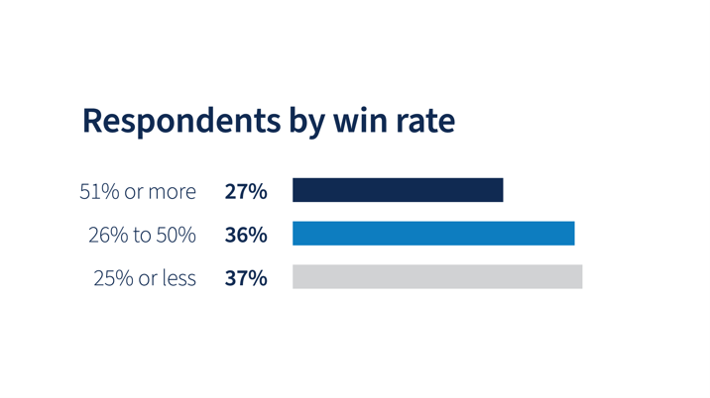
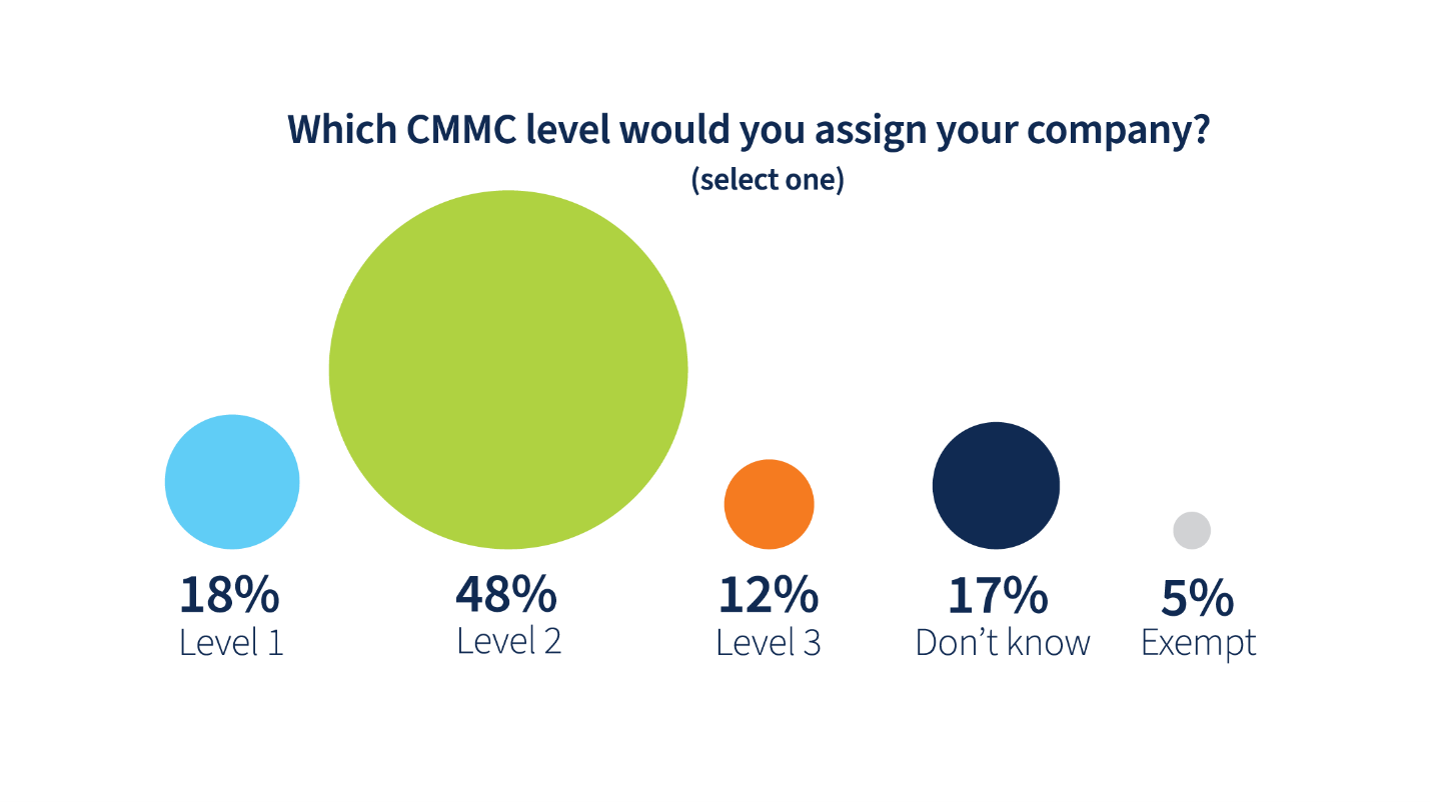
In the report, we find a strong correlation between regulatory readiness and win rate. For example, firms with win rates higher than 50% are three times likelier to consider themselves at CMMC Level 3. (A majority of GovCon firms say they operate at least at CMMC Level 2 readiness.) While correlation doesn’t necessarily mean causation, what’s clear is that CMMC has become a gatekeeper for many DoD opportunities, whereby firms that can’t demonstrate a certain level of cybersecurity maturity likely will lose new business opportunities to firms that can.
The FAR modernization compounds the regulatory challenge for GovCon firms. Agencies increasingly expect contractors to demonstrate relevant past performance, a compelling technical approach, proven management capability, and lower execution risk, and do so within increasingly compressed procurement timelines. As a result, winning is less about simply meeting requirements and more about moving quickly and demonstrating value.
For GovCon firms, it’s a perfect storm of sorts, where faster procurements mean less time to prepare and stricter cybersecurity requirements leave less room for error. Contractors who struggle to move quickly and prove performance will lose ground.
Winning Competencies for the New Regulatory Era
Ground lost by government contracting firms that don’t keep pace with CMMC and FAR modernization can be ground gained for those that do. Here’s how firms can turn their ability to navigate the new regulatory landscape into more new business wins:
- Treat compliance as a continuous, cross-functional discipline rather than a proposal activity or a series of point-in-time events. By operationalizing compliance, it becomes an integral part of day-to-day operations.
- Establish a real-time compliance framework. As fast as the regulatory updates are coming, particularly with FAR, centralized regulatory tracking is critical to staying current with updates and new requirements at the executive and agency levels. Here’s an area where AI agents are proving invaluable for their ability to alert firms to regulatory shifts, interpret new regulatory language, and map that language to contracts and business processes.
- Identify CMMC requirements during capture, not after an RFP drops. Greater visibility translates into a more productive and consistently more rewarding capture process. This advance work decreases risk and improves compliance/win probability.
- Establish a constant cycle for documenting policies, procedures, and evidence. All the fluidity with FAR and other regulations requires firms to be diligent and consistent with their policy reviews and updates to ensure they track with the latest government requirements. This helps manage compliance risk in such areas as cost allowability, indirect rate structures, and labor category alignment.
- Connect IT, contracts, capture, and operations to support compliance. Compliance in today’s rapidly shifting regulatory landscape demands the free flow of information and insight across the business in a silo-free environment.
- Invest in automation and integrated systems to reduce manual effort. Tighter RFP timelines leave little room for redundant, labor-intensive work.
- Factor their CMMC standing into bid/no-bid decisions. It’s important for firms to consider their CMMC maturity (or lack thereof) when prioritizing and selecting their pursuits.
- Understand how FAR modernization reshapes government priorities. Winning firms understand agency buying patterns, competitor positioning, evaluation trends, and task‑order activity so pipeline building, pricing, and delivery track to what the federal government values under the modernized FAR. Winning in the FAR 2.0 era requires speed, with faster opportunity identification and rapid proposal development and response. It also demands quality, with stronger narratives aligned to evaluation criteria and better use of past performance and delivery data, backed by a robust compliance posture that includes centralized documentation, audit readiness and improved tracking of partners, certifications, and requirements.
With the regulatory landscape shifting so rapidly underfoot, qualities like these can give government contracting firms the stable base needed to adapt quickly and compete effectively —and firm leaders a better night’s sleep.
Chris Crowder leads Unanet’s GovCon business unit. He is responsible for collaborating with Unanet customers, partners, key industry stakeholders, and his colleagues in product, sales, customer success, partner success, and marketing to grow and enhance our GovCon customers’ experience with Unanet. Connect with him on LinkedIn at https://www.linkedin.com/in/chris-crowder/.
NEXT STORY: New EO puts a clock on quantum-safe encryption