
Merlin Labs’ public offering collects $200M to build an AI autopilot for any aircraft
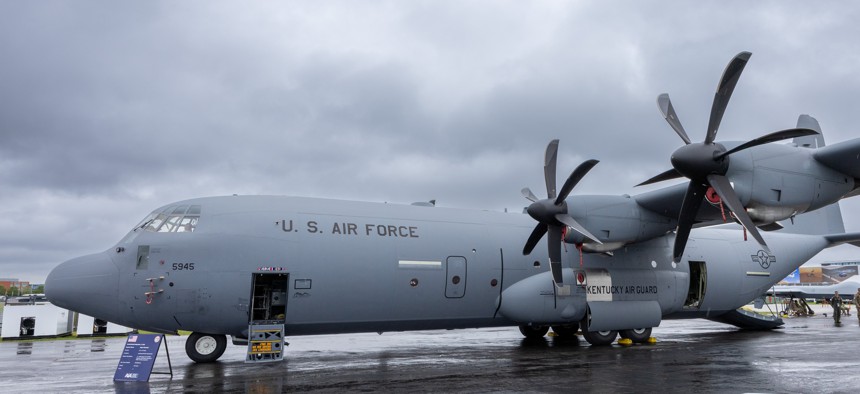
Merlin Labs' AI autonomous flight system is being tested on the C-130J like this one shown at the Farnborough Air Show last year. Gettyimages.com/Rolls-Royce Archive / Contributor

 By
Nick Wakeman
By
Nick Wakeman
The Boston-headquartered defense tech company has big ambitions for its AI-powered autonomous flight system.
Merlin Labs has already experienced growth in the market for its artificial intelligence technologies that are designed for autonomous flight, including contract wins with the Air Force and Missile Defense Agency.
Now Merlin Labs has $200 million in fresh capital thanks to its public offering this week, following its merger on Monday with the special purpose acquisition corporation Inflection Point Acquisition Corp. IV.
Merlin’s stock started trading on NASDAQ on Tuesday with the shares closing at $9.59. The IPO values the company at $800 million despite having just $8.5 million in 2025 revenue. Merlin projects 2026 revenue at $32 million.
The company has developed Merlin Pilot, an AI tool that the company says is aircraft-agnostic and can fly any plane “from take-off to touchdown.” The tool is designed to gather data during each flight that then helps it learn and get smarter.
Merlin Pilot has already attracted defense customers. According to GovTribe data, Merlin is working under a $16 million Air Force contract to apply Merlin Pilot to C-130J aircrew workload management.
The Missile Defense Agency awarded Merlin a spot on SHIELD — the Scalable Homeland Innovative Enterprise Layered Defense program. Shield is the contract vehicle supporting work to develop the Golden Dome missile defense system.
According to internal projections included in regulatory filings, Merlin plans to spend $30.3 million on research-and-development efforts in 2026 compared to $27 million in 2025.
Merlin also expects to burn through an estimated $61.6 million in total cash. Sales and marketing spending is projected at $3.9 million.
“At Merlin, we are rethinking what flight can be,” said CEO Matt George. “Aviation up to now was defined by the humans who fly aircraft — and so aviation design, engineering, and operations reflected a human focus. Merlin was founded on the insight that, when you challenge that core human-centricity and all its related assumptions, the nature and possibilities of aviation change.”