
Air Force charts new path to recompete nuclear missile support work
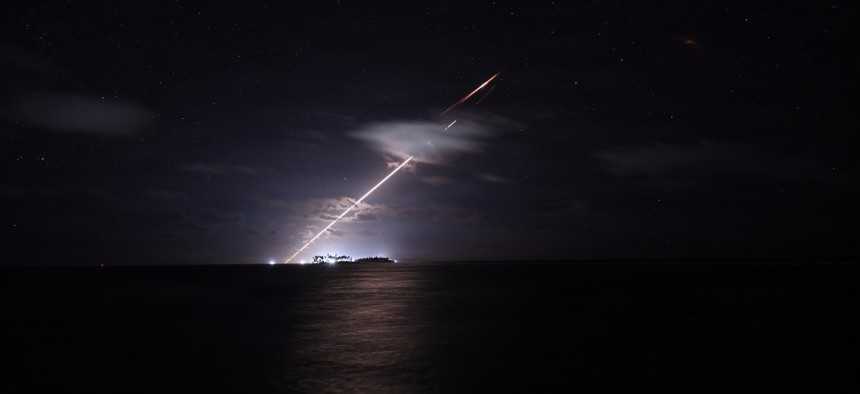
An unarmed Minuteman III intercontinental ballistic missile launched in February 2025 from Vandenberg Space Force Base, California. Photo by Sherman Hogue

 By
Ross Wilkers
By
Ross Wilkers
Instead of one big contract, the service branch will hold separate competitions for different lines of work to aid in the transition to a new ground-based system.
The Air Force has opted for a different approach in how it plans to recompete systems engineering, integration and other related modernization work on the Air Force’s major ballistic missile systems.
Over many years, we have reported on the multiple twists and turns involving what was the potential $12 billion Integration Support Contract 2.0 contract. Long-time incumbent BAE Systems Inc. and Guidehouse traded wins, with each company protesting when the other won the 18-year award.
ISC 2.0 was going down the path of a new solicitation, but the Air Force has taken a left turn there as well after deciding to break up the work into separate competitions.
The Air Force now plans to compete and award separate task orders for what is now being called the ICBM Development, Operations, and Sustainment program. This will happen via the OASIS+ professional services vehicle, the service branch said in a Jan. 30 sources sought notice.
One order will cover systems engineering and integration support services, while the second focuses on program execution support services. Requests for information on those orders is available on the General Services Administration’s eBuy portal.
Companies interested in the SE&I work should look up RFI1794190 and RFI1794191. Firms eyeing the program execution work should look up RFI1794192 through RFI1794195.
IDOS’ core mission remains the same as it will support the Air Force’s work to retire its Minuteman III intercontinental ballistic missiles. Northrop Grumman is building the new Sentinel missile system, also known as the Ground-Based Strategic Deterrent.
BAE has held the ISC program since 2013 and that contract is slated to sunset in July 2027. The Air Force has obligated $2.1 billion in task order volume to-date, according to GovTribe data.
While more details are in the works, the Air Force has also indicated it plans to break out the IDOS program’s IT support requirement into a separate competition as well.
The Air Force’s last major update on that front came via a request for information in December, a notice that also included a performance work statement describing the scope of support needed.
That list includes service desk, documentation, project management, software licensing, hardware lifecycle, audio/visual, procurement, data storage, security, operations, compliance, and continuous improvement efforts.