
Aurex's blueprint for leaning forward in space, missile defense
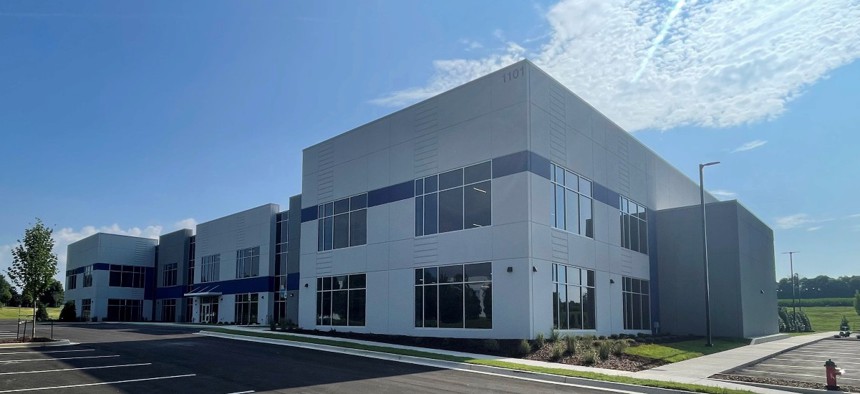
Aurex’s new mission center in Huntsville, Alabama. Aurex photo.

 By
Ross Wilkers
By
Ross Wilkers
Rapid development and deployment are points of emphasis for this midsized company that is comfortable with getting feedback from operators on how the tech works, as Aurex's CEO tells us.
Perhaps no government undertaking in recent memory will require an all-of-industry-approach like Golden Dome, the military’s vision for creating a new missile defense shield to protect the continental U.S.
However it develops, Golden Dome will need a solid foundation of software and other key services from the ground to enable hardware operating both there and in space to work effectively.
I spoke with Aurex’s chief executive Warren Kohm to get a snapshot of how industry is looking at that effort, plus how this middle-tier company is positioning itself for opportunities in space and missile defense.
He compared the conversations happening now about space in general, and yes Golden Dome, to prior efforts that spurred pushes for innovation. Think the Apollo project in the 1960s as an example Kohm offered up in the conversation.
“You’re looking at a time where our whole entire country is leaning forward, so whether you're part of an industry that is 200 people or 2000 people or 200,000 people, there's something there for everybody,” Kohm said.
Aurex is owned by the private equity firm Godspeed Capital Management, which acquired the SAS business in the spring of 2024 and used it as the foundation to create the 250-employee company it is today.
Space and missile defense, including hypersonics, are the core focus areas for Aurex with an emphasis on rapid development and deployment of the underlying technologies.
Stay in the know — Washington Technology’s Insider Membership gives you unmatched access to breaking news, in-depth analysis, and insights that federal contractors can’t afford to miss. Join today for 50% off.
Kohm said that increasingly the technology being provided to the operator is considered roughly 80%-ready as opposed to the traditional 100%-bespoke approach. On the other hand, more industry leaders like Kohm are telling us that getting the tech to 100% only can happen through live feedback from operators.
“Through tests and evaluation and involvement, it helps equip the warfighter faster to combat these ever-changing ways in the battlefield and how the battlefield management process is being run,” Kohm said.
Aurex’s strategy and vision as a company and its approach to technology development can be seen through the prism of its mission center campus, a facility that is near-completion and is a means to put down roots in Huntsville, Alabama.
Construction work on the center started in the summer of 2024. Kohm told us the ribbon-cutting ceremony is scheduled for Sept. 8 and Aurex is “in the process now of filling it up with customers.”
The mission center is also a way for Aurex to work on problems and invest in solutions before the customer collective starts asking for them, Kohm said.
“We didn't develop the four bays because we're waiting for the customer requirements to be laid down and committed to,” he said. “As those customer requirements we'll take further capabilities, fill them out, machine them, put the cranes and other things in that need to be done.”
Aurex can also lean on its private equity backing to make those investments that a similar midsized company could not on its own. Many other companies in the middle tier live on a more month-to-month basis.
“This is my first experience working with a private equity company and the ability to say ‘This is a really important investment to make for our future,’” Kohm said. “Then they say ‘I agree, here's the funds, go do it.’”