
SAIC's CEO highlights mission IT, engineering work as priorities
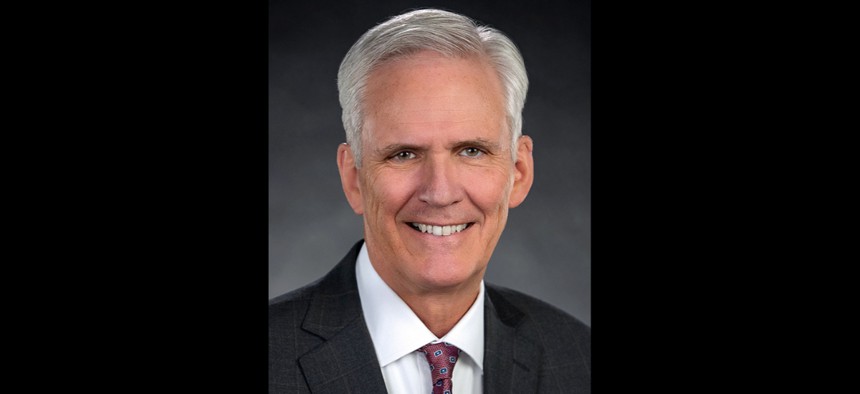
Jim Reagan was appointed SAIC's interim CEO in October and became full-time in February. SAIC photo.

 By
Ross Wilkers
By
Ross Wilkers
In talking with Wall Street, CEO Jim Reagan explains why the company is moving away from some enterprise IT work in favor of mission IT and how it has launched a bottom-up review of the business.
As Science Applications International Corp.’s interim chief executive, Jim Reagan’s primary focus was on getting the company’s business development engine back in gear to reverse multiple years of organic growth declines.
Now SAIC’s full-time CEO as of Feb. 17, Reagan has added a reassessment of the company’s strategy onto his to-do list and is engaging in an exercise that SAIC usually undertakes during the summer months.
During SAIC’s fourth quarter and fiscal year end earnings call with investors Monday, Reagan conceded it may be “premature for me to announce any strategic pivots.” Especially when considering this was only his second call with Wall Street as either interim or full-time CEO.
But in talking with analysts, Reagan offered another glimpse into the decision to move away from certain types of large enterprise IT contracts.
“There are a handful of customers that are buying based on, what I might say, is kind of more of a cookie-cutter recipe for what they are looking for, where it is heavily embedded with network management, network uptime, help desk support, things that are harder to differentiate than the things that blend more of a mission focus in with the IT side,” Reagan said on Monday.
Reagan’s comments follow those of SAIC’s chief financial officer Prabu Natarajan, who told a TD Cowen-hosted investor conference in February that the company is de-prioritizing cost-plus enterprise IT contracts.
Defense agencies prefer to structure enterprise IT contracts as cost-plus versus how civilian agencies tend to go down the fixed-price path SAIC prefers for this type of work, Natarajan said at the time.
Not all IT needs in the government are created exactly alike, however. Whereas enterprise IT focuses on an agency’s broader technology infrastructure, mission IT and engineering is more about solving problems of the individual end user and prioritizes speed of implementation.
“It is probably supporting networks that support the warfighter and networks that blend multiple areas of information and synthesize it into a pane of glass for people that do mission planning,” Reagan said of mission IT. “Those are the things that we think that we can continue to excel at or earn our share on recompetes and new work.”
Mission IT is also where SAIC’s $205 million acquisition of SilverEdge Government Solutions comes into more focus. Completed in October, SAIC views this transaction as adding artificial intelligence work into the portfolio for defense and national security agencies.
Reagan said SAIC is also working to incorporate more elements of the business model it acquired with SilverEdge.
“We think that the things that we have acquired from them on the intellectual property side, as well as some of the capabilities that we have to serve our intelligence customers with AI enablement in classified networks, is something that we think is extensible beyond the customers that they brought with them, and we are working to leverage that,” Reagan said.
As the strategy reassessment advances, SAIC is also moving ahead on an enterprise transformation initiative to look at the company's processes and procedures.
Reagan characterized that initiative as the first such “bottoms up review” since the 2013 split into Leidos and today’s version of SAIC. Employees at all levels of the company are contributing to the review in some way, shape or form.
Reagan told analysts he gets an email “at least once or twice a week” from an employee pointing out things SAIC does well and needs to improve upon, all in the name of helping them in their day-to-day jobs.
The idea behind employees having a voice in the process is to “get some gunk out of the system,” Reagan added.
Sometimes they are seemingly mundane, but still important. Some of them are things that I would not have been made aware of had not someone sent me an email directly,” Reagan said. “I look at that, I read it, I send it to the team in the program office that is running this.”
Fiscal fourth quarter revenue of $1.75 billion was down 5% from the prior year period, while profit of $181 million showed a 2.2% year-over-year increase in adjusted EBITDA (earnings before interest, taxes, depreciation and amortization).
For SAIC’s 2026 fiscal year ended Jan. 31, sales of $7.2 billion were down 3% and adjusted EBITDA of $708 million was flat. That translates to an adjusted EBITDA margin of 9.7% compared to the 9.5% figure for FY 2025.
SAIC’s initial guidance for its 2027 fiscal year has revenue in the $7 billion-to-$7.2 billion range, indicating a decline of 2%-to-4%, with adjusted EBITDA in the $705 million-to-$715 million range. That translates to an adjusted EBITDA margin outlook of 9.9%-to-10.1%.